

Bridging the divide: understanding the implementation gap
Discover how the CareGuard Initiative is working to close the critical gap between expert recommendations and public understanding in oral health. Learn why this gap exists, who it impacts most, and our innovative approach to ensuring everyone has access to vital health information.
What is the implementation gap?
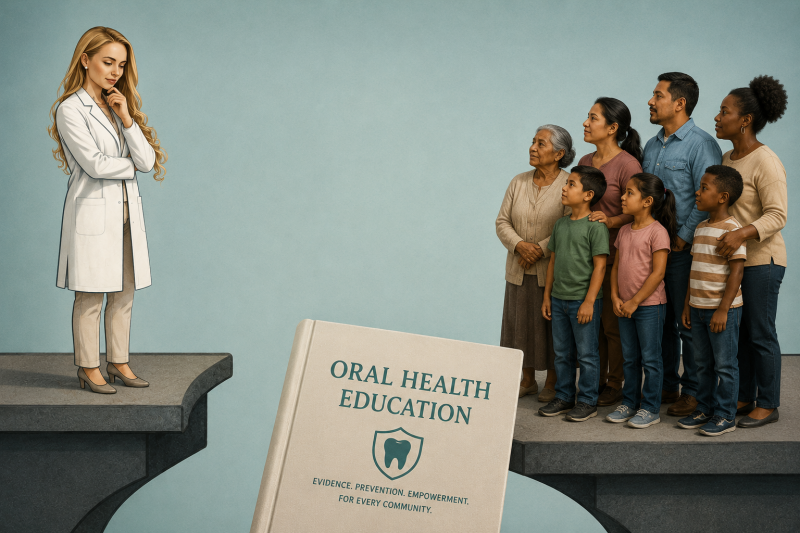
The Implementation Gap refers to the disconnect between evidence-based oral health recommendations and their successful adoption, understanding, and everyday use by the public.
Although federal agencies such as the CDC, NIDCR, HRSA, and Healthy People 2030 have developed comprehensive, evidence-based preventive oral health guidance, many individuals continue to face barriers that prevent these recommendations from translating into real-world health behaviors. These barriers include limited oral health literacy, language differences, cultural factors, and a lack of accessible educational resources.
As a result, proven preventive strategies often fail to reach the populations that could benefit from them the most.
The CareGuard Initiative helps bridge this implementation gap by translating authoritative scientific guidance into clear, multilingual, culturally appropriate educational resources that improve health literacy, support informed decision-making, and promote evidence-based preventive oral health behaviors throughout the United States.
Closing the implementation gap is increasingly recognized as a national public health priority because scientific discoveries improve population health only when they are successfully translated into routine practice and public understanding.
Who is affected and why it matters
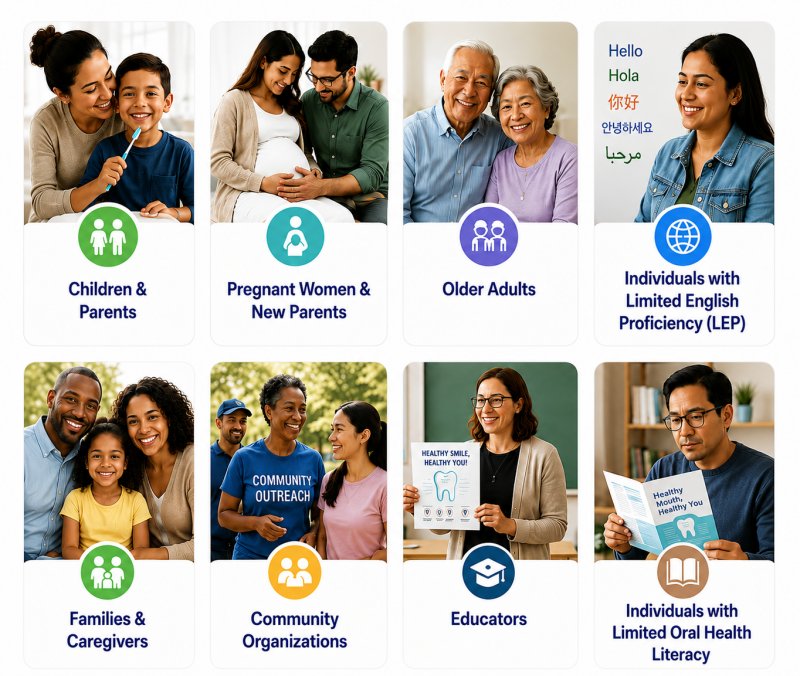
The implementation gap disproportionately affects populations that face the greatest barriers to accessing, understanding, and applying evidence-based oral health information. These include individuals with limited oral health literacy, people with Limited English Proficiency (LEP), children and families, caregivers, pregnant women, older adults, individuals living in underserved communities, educators, and community organizations.
These populations are also among those identified in federal public health initiatives as experiencing significant disparities in access to preventive oral healthcare and oral health education.
By translating authoritative scientific guidance into clear, multilingual, and culturally appropriate educational resources, the CareGuard Initiative helps reduce educational and language barriers, improve oral health literacy, and expand equitable access to preventive oral health information.
Supporting these populations contributes to national public health priorities by encouraging earlier prevention, improving informed health decision-making, reducing preventable oral diseases, and promoting health equity across the United States.
Our Mission
One key takeaway
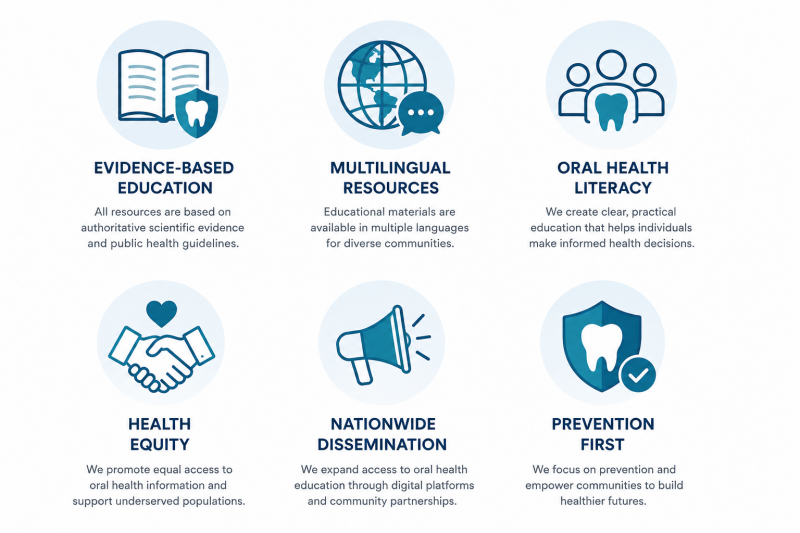
Scientific evidence only improves public health when people can understand and apply it. CareGuard transforms authoritative federal oral health guidance into accessible, multilingual educational resources that empower individuals, strengthen oral health literacy, and support the nationwide implementation of evidence-based preventive care.
References
- National Cancer Institute. Implementation Science. https://www.cancer.gov/research/areas/treatment/implementation-science
- CDC. Implementation Science. https://www.cdc.gov/niosh/implementation-science/about/index.html
- Healthy People 2030. Oral Conditions. https://health.gov/healthypeople/objectives-and-data/browse-objectives/oral-conditions
- National Institute of Dental and Craniofacial Research (NIDCR). https://www.nidcr.nih.gov