

Module 6: Safe Practice in Healthcare-Adjacent Environments
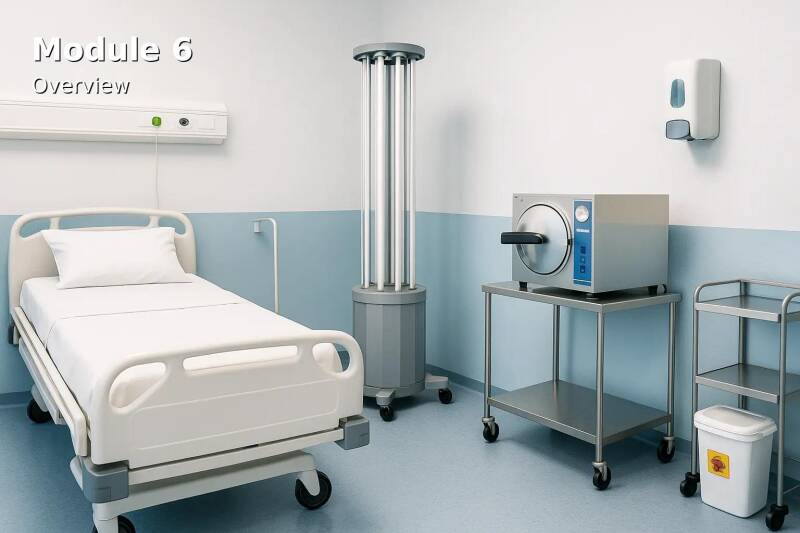
This module introduces the principles of safe practice in healthcare-adjacent environments, including outpatient settings, private practice spaces, and non-hospital-based service locations. It focuses on how safety standards, infection control, and risk management must be adapted and consistently applied outside of traditional clinical settings.
In the United States, a significant portion of services are performed in outpatient and decentralized environments. While these settings provide accessibility and efficiency, they also present increased risks due to variability in training, environment control, and regulatory oversight.
Failure to maintain consistent safety standards in such environments can lead to preventable complications, infection transmission, and increased burden on the healthcare system.
This module emphasizes standardization, environmental awareness, and structured safety implementation as key components of responsible practice.

Learning Objectives
Upon completion of this module, participants will be able to:
- Define healthcare-adjacent environments and understand their role in service delivery
- Identify safety risks unique to outpatient and non-clinical settings
- Apply infection control and safety principles outside of hospital environments
- Understand the importance of environmental control and workspace preparation
- Recognize variability in standards and the need for consistent protocols
- Implement structured workflows that reduce risk and improve consistency
- Identify gaps in safety practices and correct them using standardized approaches
- Understand how decentralized practice impacts public health outcomes
- Apply safety principles in mobile, temporary, or multi-location settings
- Integrate compliance, ethics, and risk screening into a unified practice model
Core Concepts: What Are Healthcare-Adjacent Environments
Healthcare-adjacent environments are settings where services are performed outside of traditional hospitals or clinical institutions but still involve direct client interaction and potential exposure to health-related risks.
These environments may include:
• outpatient service locations
• private practice suites
• aesthetic or procedural studios
• mobile or temporary service setups
• shared professional spaces
While these environments may not be classified as full medical facilities, they still require structured safety practices due to the nature of services performed.
The absence of hospital-level infrastructure increases the importance of individual responsibility and standardized protocols.


Unique Risks in Non-Clinical Settings
Healthcare-adjacent environments present specific risks that must be actively managed.
These risks include:
• inconsistent infection control practices
• lack of standardized workflows
• limited supervision or oversight
• variability in training and experience
• improper equipment handling
• inadequate environmental sanitation
• poor ventilation or workspace design
• cross-contamination due to shared spaces
Unlike hospitals, where systems enforce compliance, these environments rely heavily on individual implementation of safety standards.
This makes structured education and standardized protocols essential.
Standardization as a Safety Strategy
Standardization is one of the most effective ways to reduce risk in decentralized environments.
Standardization means:
• performing procedures using consistent steps
• following the same safety protocols every time
• minimizing variation in decision-making
• applying evidence-based practices
Benefits of standardization:
• reduced error rates
• improved safety outcomes
• easier training and scalability
• increased regulatory compliance
• better client trust
Without standardization, safety becomes inconsistent and dependent on individual judgment alone.


Environmental Control and Workspace Safety
The physical environment plays a critical role in infection prevention and safe practice.
Key components of a safe workspace include:
• clean and organized work surfaces
• separation of clean and contaminated areas
• proper lighting and visibility
• access to hand hygiene facilities
• appropriate storage of instruments and materials
• routine surface disinfection
High-touch surfaces must be regularly cleaned and disinfected to prevent cross-contamination.
Environmental control is not optional—it is a foundational requirement for safe service delivery.
Workflow Design and Risk Reduction
A structured workflow reduces errors and improves consistency.
Safe workflow includes:
• preparation of workspace before each client
• verification of client assessment and screening
• proper hand hygiene before and after interaction
• correct use of PPE
• controlled handling of instruments and materials
• proper waste disposal
• post-procedure cleanup and disinfection
Each step must be performed in a consistent and logical sequence.
Skipping steps or changing order increases the risk of contamination and error.


Infection Control Outside Clinical Settings
Infection control principles remain the same regardless of environment, but their implementation requires greater discipline outside clinical facilities.
Important considerations:
• limited access to sterilization equipment in some settings
• reliance on portable or alternative systems
• increased responsibility for surface disinfection
• higher risk of cross-contamination in shared spaces
Professionals must adapt infection control practices while maintaining the same level of safety.
Mobile and Multi-Location Practice
Some professionals operate across multiple locations or provide mobile services.
These settings introduce additional risks:
• transporting equipment between locations
• inconsistent environmental conditions
• variable sanitation standards
• time constraints affecting preparation
To maintain safety:
• portable equipment must be properly cleaned and stored
• consistent setup protocols must be followed
• each location must meet minimum safety requirements
• no compromises should be made due to convenience
Mobility increases flexibility, but also requires stricter discipline.


Integration of Ethics, Compliance, and Screening
Safe practice is not based on a single factor—it requires integration of multiple components.
These include:
• infection control (Module 1)
• regulatory compliance (Module 2)
• public health awareness (Module 3)
• ethical decision-making (Module 4)
• client assessment and screening (Module 5)
When combined, these elements create a comprehensive safety system.
Failure in any one area increases overall risk.
Common Failures in Healthcare-Adjacent Settings
Common safety failures include:
• skipping infection control steps
• inconsistent use of PPE
• poor workspace preparation
• performing services without proper assessment
• lack of standardized workflow
• ignoring environmental risks
• prioritizing speed over safety
These failures are often preventable and are typically the result of lack of structure rather than lack of knowledge.

Practical Application in Professional Settings
Safe practice must be applied consistently in real-world environments.
Key applications include:
• setting up a controlled and clean workspace before each service
• applying infection control protocols consistently
• following structured workflows without deviation
• adapting to different environments without reducing safety standards
• maintaining awareness of environmental risks
• integrating screening and ethical decision-making into every interaction
Safe practice is defined by consistency, not by isolated actions.
Practical Example
A professional is working in a shared suite environment where multiple practitioners use the same space throughout the day.
A safety-oriented approach would include:
• disinfecting all surfaces before and after each client
• verifying that all instruments are properly processed
• avoiding cross-use of materials without proper sanitation
• maintaining separation between clean and contaminated items
• not assuming that previous users followed proper protocols
This example highlights the importance of not relying on external conditions and maintaining independent responsibility for safety.
Why This Module Matters for Public Health
Healthcare-adjacent environments represent a growing segment of service delivery in the United States.
When safety standards are not consistently applied in these environments, the result may include:
• increased infection transmission
• preventable complications
• additional strain on healthcare systems
• reduced public trust in professional services
By promoting standardized, safe practices across decentralized environments, professionals contribute to:
• improved safety outcomes
• reduced burden on emergency and follow-up care
• better system efficiency
• stronger public health protection
This module supports a scalable model of safety that can be applied across multiple environments and professional roles.
Module Summary
This module introduced the principles of safe practice in healthcare-adjacent environments.
Participants learned:
• what defines healthcare-adjacent environments
• the unique risks present outside clinical settings
• the importance of standardization in reducing variability
• how to control the environment and maintain workspace safety
• how structured workflows support consistent practice
• how mobility and multi-location services affect safety
• how integration of prior modules creates a complete safety system
The consistent application of these principles is essential for maintaining safe, reliable, and scalable professional practice.
Safe practice in decentralized environments is not optional—it is a critical component of modern service delivery and public health protection.